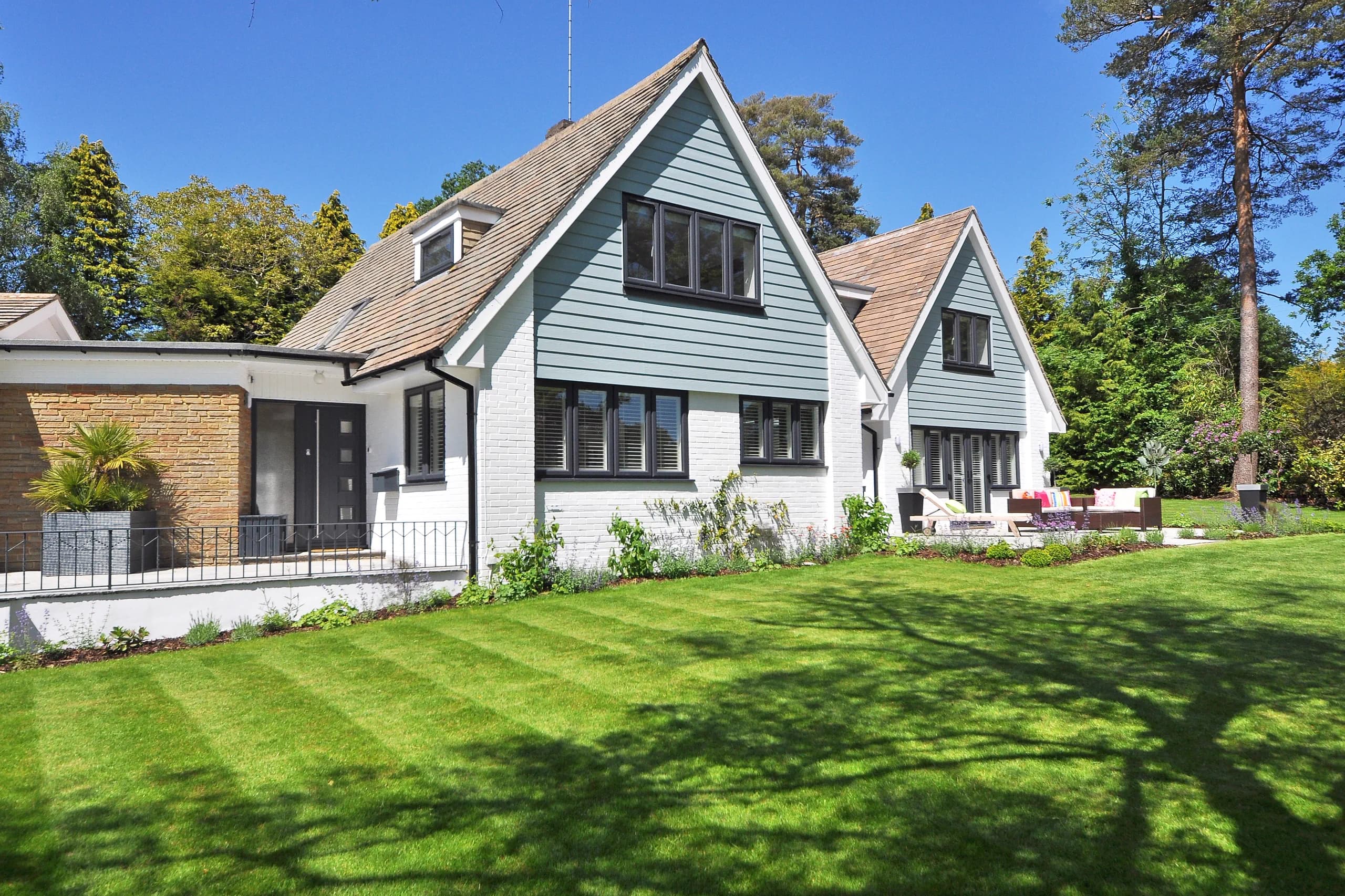
A roofing estimate is full of words most people never use anywhere else. Ridge, rake, valley, fascia, counter-flashing, decking. You do not need to become a roofer, but knowing what these parts are turns an estimate from a foreign language into something you can actually read and compare. Here is a plain-language tour of a roof, from the wood frame up to the shingle at the peak.
The structure underneath
- Rafters are the angled beams cut on site that run from the peak down to the walls and carry the roof. Trusses are the factory-built triangular frames that do the same job with lighter wood, which is what most newer homes use.
- Decking, also called sheathing, is the flat layer of plywood or OSB fastened over the rafters or trusses. It is the surface everything else is nailed to.
- A ridge board is a non-structural board the rafters nail against at the peak. A ridge beam is a structural version used on cathedral ceilings that actually carries load. They sound alike and are not the same thing.
The decking is more important than it sounds, because a good roof cannot be built on bad decking. We cover that in roof decking and what it adds to the bill.
The lines and planes
These are the words for the shapes of a roof, and getting two pairs straight explains most of it:
- The ridge is the horizontal line at the very top, where two slopes meet at the peak.
- A hip is an external angle, an outward ridge running down to a corner. A valley is the opposite, an internal angle, an inward trough where two slopes meet. Hips shed water, valleys collect it.
- The eave is the lower horizontal edge, the part that overhangs the wall. The rake is the sloped edge of a gable, running from eave up to ridge.
The valley is worth remembering, because it carries the most water on the roof and leaks the soonest, as we cover in roof valleys: open vs closed.
The edges and trim
- The fascia is the vertical board running along the eave that caps the ends of the rafters and holds the gutters.